Filing A Case In Nepal
Filing A Case In Nepal
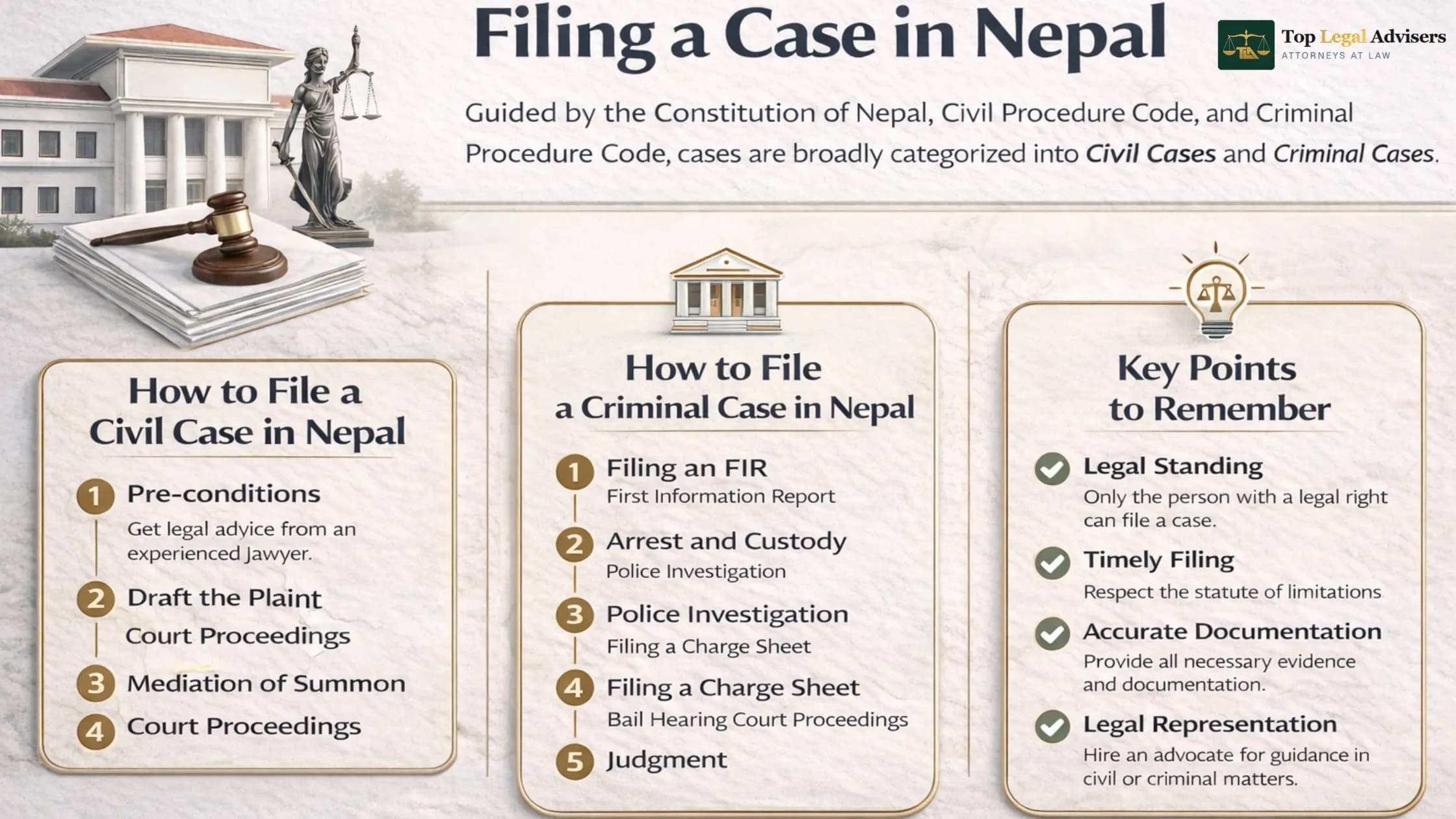
Filing a case in Nepal begins with either filing a complaint at the police (for criminal matters) or submitting a petition at the court (for civil disputes). The procedures are guided by:
-
Constitution of Nepal, 2015 (2072)
-
Civil Procedure Code, 2017 (2074)
-
Criminal Procedure Code, 2017 (2074)
Cases are broadly categorized into:
-
Civil Cases – disputes related to property, contracts, family matters, personal rights, etc.
-
Criminal Cases – cases involving offenses such as theft, assault, fraud, homicide, and other crimes.
1. How to File a Civil Case in Nepal?
Step 1: Pre-conditions
-
Ensure the matter is civil in nature.
-
The person filing must have legal standing.
-
File the case within the statute of limitations as prescribed by law.
Step 2: Determine Jurisdiction
-
Jurisdiction depends on subject matter, location of dispute, and addresses of parties.
-
District Court generally handles civil cases at the first level.
Step 3: Draft the Plaint
The plaint is a written application including:
-
Names and addresses of plaintiff and defendant
-
Subject matter and facts of the dispute
-
Legal provisions supporting the claim
-
Relief or remedy sought
Step 4: File the Plaint
-
Submit the plaint with supporting documents (contracts, property deeds, evidence).
-
Pay the court fee, which varies by claim amount.
Step 5: Issuance of Summon
-
Court issues a summon to the defendant.
-
Delivery is ensured by court officials or law enforcement.
Step 6: Written Response by Defendant
-
Defendant submits a written statement within the legal timeframe (typically 21 days).
-
May include defenses or counterclaims.
Step 7: Mediation
-
Court may offer mediation to resolve the dispute amicably.
-
A mediator facilitates discussions between the parties.
Step 8: Court Proceedings
-
Submission of evidence
-
Witness examination and cross-examination
-
Legal arguments by advocates citing statutes, case laws, and precedents
Step 9: Final Judgment
-
Court delivers judgment based on evidence, witness testimony, and legal arguments.
-
Judgment may include monetary compensation, damages, or other remedies.
2. How to File a Criminal Case in Nepal?
Step 1: Filing an FIR (First Information Report)
-
Anyone aware of an offense may file an FIR at the nearest police station.
-
FIR can be verbal, written, or electronic with supporting evidence.
Step 2: Arrest and Custody (if applicable)
-
Police may arrest the accused after obtaining a court-issued arrest warrant.
-
Urgent arrests may be done with an emergency warrant, and the accused must be presented in court within 24 hours.
-
Police may hold the accused in custody for up to 25 days with court approval for investigation.
Step 3: Police Investigation and Evidence Collection
-
Evidence collection – documents, forensic reports, surveillance, etc.
-
Witness statements – victims, witnesses, and accused are recorded.
-
Medical examination – in cases involving physical harm, sexual assault, or unnatural death.
Step 4: Filing a Charge Sheet
-
Investigation officer submits a charge sheet to the government attorney.
-
Charge sheet includes details of the crime, evidence, witness statements, and requested legal action.
Step 5: Bail Hearing
-
Court decides whether the accused will remain in custody or be released on bail.
Step 6: Court Proceedings
-
Submission of evidence
-
Witness examination and cross-examination
-
Legal arguments by government attorney and defense lawyer citing relevant laws and precedents
Step 7: Judgment
-
Court delivers final judgment based on evidence, testimonies, and arguments.
-
Judgment may include imprisonment, fines, compensation, or other remedies.
3. Key Points to Remember
-
Legal Standing: Only the person with a legal right can file a case.
-
Timely Filing: Respect the statute of limitations.
-
Accurate Documentation: Provide all necessary evidence and documentation.
-
Legal Representation: Hire an advocate for guidance in civil or criminal matters.
-
Mediation First: Civil cases may be resolved through mediation before full trial.