Commercial Contracts in Nepal
Every business deal in Nepal rests on a contract. A supplier agreement, a shareholder deal, an office lease, a software licence, a cleaning arrangement for an office building. Written well, a commercial contract keeps the deal moving and keeps both sides out of court. Written poorly, or not written at all, it becomes the reason for a two-year court case.
Commercial contracts in Nepal are governed primarily by the National Civil Code, 2074 (the Muluki Civil Code, 2074). In practice, commercial contracting here still runs into three recurring problems: weak drafting, slow enforcement, and unclear dispute resolution. That is why legal guidance matters at the drafting stage, not only after a dispute starts.
What is a Commercial Contract?
A commercial contract is a legally binding agreement between two or more parties for a business purpose. It records what each side must give, what each side must receive, when it must happen, and what happens if someone fails to perform. A shop buying rice from a wholesaler, a bank lending to a hotel, a company hiring a consultant, a landlord leasing a warehouse. All of these are commercial contracts.
Under the National Civil Code, 2074, a contract is an agreement enforceable by law, made between two or more persons, to do or not to do a certain act. It comes into existence when the person receiving an offer communicates acceptance of it.
Two points surprise many business owners. First, a contract does not always have to be written. An oral contract can be valid, but the party claiming it must prove it existed and what its terms were, which is very hard. Second, a signature alone does not make a contract valid. If an essential element is missing, the contract can still be void or voidable, no matter how many signatures and stamps it carries.
Legal Framework for Commercial Contracts in Nepal
- National Civil Code, 2074. Part 5 contains the law of contracts and obligations. It came into force in Bhadra 2075 (17 August 2018) and replaced the Contract Act, 2056.
- Sector-specific legislation, applying on top of the Civil Code depending on the deal: the Companies Act, 2063; the Foreign Investment and Technology Transfer Act, 2075; the Labour Act, 2074; the Public Procurement Act, 2063; the Electronic Transactions Act, 2063; the Arbitration Act, 2055; and the stamp duty and registration rules for registered deeds. Deals involving overseas capital also fall under the foreign investment approval process, on top of the Civil Code itself.
- Judicial interpretation and settled contractual principles developed by the Supreme Court of Nepal.
A common confusion to clear up: people often search for a separate "Contract Act, 2074". There is no such Act. The old Contract Act, 2056, was repealed and its subject matter absorbed into the National Civil Code, 2074. When a lawyer in Nepal refers to contract law today, they mean the Civil Code provisions.
Essential Elements of a Valid Commercial Contract

|
Element |
Description |
|
Offer |
Clear proposal by one party |
|
Acceptance |
Unconditional agreement to that proposal |
|
Free consent |
Consent given without coercion, undue influence, or fraud |
|
Lawful consideration |
Legal exchange of value between the parties |
|
Competent parties |
Legal capacity to contract |
|
Legal purpose |
Lawful and enforceable objective |
Acceptance must match the offer. Any change of terms is a fresh counteroffer, and the original offer dies. Silence is not acceptance in Nepal. Where consent was obtained by coercion, undue influence, fraud or misrepresentation, the contract is generally voidable: it stays valid until the affected party cancels it, within a reasonable time.
On capacity, a signatory must actually hold authority to bind the company. This is precisely the kind of gap that gets checked as part of proper company registration and compliance. We see more contracts fail on this point than on any other. A branch manager signing a share transfer, or a marketing head signing a loan guarantee, can leave the whole document open to challenge. And if the object of the contract is illegal or against public policy, the contract is void from the beginning. Knowing whether your contract is void or merely voidable decides your entire legal strategy, so this check belongs at signing, not after the dispute.
Why Do You Need a Commercial Contract?
A contract is not a sign of distrust. It is a record of what was agreed, written down while both sides are still happy. It fixes the deal in writing, allocates risk, creates a payment path, and gives you something concrete to enforce when performance fails. It also protects your position with regulators, banks, and investors, who will not release funds against a one-page understanding. The cost of drafting a contract properly is always a fraction of the cost of litigating one drafted badly.
Types of Commercial Contracts
Commercial contracts in Nepal take many forms, shaped by the nature of the deal and the sector involved. The common types that businesses encounter include:
- Sale or purchase of goods
- Supply of services
- Business partnerships
- Investment and financing deals
- Construction and infrastructure contracts
- Employment and consultancy agreements
- Digital and IT service contracts
- Lease and tenancy agreements
- Joint venture agreements
What are Commercial Terms in a Contract?
"Commercial terms" are the clauses that decide the money, the risk, and the exit. The rest is often called legal boilerplate. Most disputes in Nepal begin over commercial terms.
|
Clause |
What goes wrong in Nepal |
|
Parties. Legal name, registration number, address, signatory |
Signed in a trade name, not the registered company name |
|
Scope. What is supplied, in what quantity, to what standard |
Vague scope leading to endless free "extra" work |
|
Price and taxes. Currency, VAT inclusive or exclusive, who bears TDS |
Silence on VAT, then a 13 percent argument after delivery |
|
Payment terms. Invoice dates, credit period, advance, retention |
No due date at all, so no clear default |
|
Delivery. Dates, milestones, place of delivery, transport cost |
"As soon as possible" written into a binding contract |
|
Warranties. What is promised about the goods or the service |
No warranty on quality, so no claim on defects |
|
Indemnity. Who compensates whom, for what loss, up to what limit |
Unlimited indemnity is accepted without reading |
|
Limitation of liability. A cap on exposure, exclusion of indirect loss |
No cap, so a small contract carries unlimited risk |
|
Confidentiality. What is secret, for how long, and what happens on breach |
Missing entirely from supplier contracts |
|
Intellectual property. Who owns the work product, code, or data |
Software built in Nepal, ownership never transferred |
|
Force majeure. Which events excuse performance |
Strikes, bandhs, and border blockades not listed |
|
Termination. Notice period, for cause and for convenience |
No exit route, so parties stay locked in a dead deal |
|
Governing law. Which country's law applies |
Left blank in cross-border deals |
|
Dispute resolution. Court or arbitration, seat, language, arbitrators |
An arbitration clause naming no seat and no rules |
|
Notices. Address and method for formal communication |
Notices sent by Viber, then disputed in court |
If your contract does not answer every row above, it is not ready to be signed.
Commercial Contract Format in Nepal
No official commercial contract format is prescribed by law. What matters is that the document is clear, complete, and properly executed. A professionally drafted contract generally runs: title and date; parties clause with full legal names, registration numbers, PAN or VAT numbers and addresses; recitals explaining briefly why the parties are contracting; definitions, so terms like "Services" and "Confidential Information" carry one fixed meaning; operative clauses on scope, price, payment and timelines; risk clauses on warranties, indemnity, limitation of liability, insurance and force majeure; protection clauses on confidentiality, intellectual property and data protection; term and termination, with survival of clauses; dispute resolution and governing law; boilerplate on notices, assignment, amendment, waiver and severability; the execution block; and schedules holding the detailed scope, pricing tables and service levels.
Execution formalities people forget:
- Sign every page, not only the last, to prevent page substitution allegations.
- Attach the board resolution or written authority of the person signing for a company.
- Pay the correct stamp duty. Insufficient stamping can block the document from being accepted in evidence until the shortfall and penalty are paid.
- Register the deed where registration is required, especially for immovable property.
- Keep an original with each party. A photocopy is a weak litigation asset.
We do not recommend downloading a foreign template and changing the names. Those documents are drafted for other legal systems. They usually contain clauses that Nepali courts will not enforce and leave out the ones you actually need, such as VAT and TDS allocation, stamp duty responsibility, and an arbitration clause that works under the Arbitration Act, 2055.
Commercial Land Contracts in Nepal
A commercial land contract is any agreement to buy, sell, lease, or develop land or premises for business use. It is one of the highest-value and highest-risk contract categories in Nepal. Three arrangements are often mixed up:
- Sale and purchase: Ownership transfers only when the deed is registered at the Land Revenue Office (Malpot). A signed sale agreement creates rights between the parties, but it does not by itself pass title.
- Commercial lease or tenancy: Used for offices, shops, godowns, factories, and restaurants. Leases beyond the period fixed by law require registration to be fully effective against third parties. The lease must deal clearly with rent, escalation, security deposit, permitted use, renewal, sub-letting, damage on exit, and who pays which utilities and taxes.
- Development or joint venture: A landowner contributes land, and a developer contributes construction. These need careful drafting on ownership of the constructed units, timelines, penalties, and what happens if the project stalls.
What we always check:
- The seller or lessor is the registered owner on the current Lalpurja, with no dispute, mortgage or attachment recorded.
- The land use classification permits the intended commercial activity, and municipal rules allow the proposed construction.
- Any bank charge on the property is disclosed and cleared.
- Advance payments are protected by staged payments against registration milestones.
- For foreign investors, restrictions on land ownership by foreign nationals apply. Land is typically held by the Nepal-registered company, and purchase for an approved project runs through the approval process linked to the investment. Plan this together with the FDI approval, not after it.
Service Contracts, Cleaning Contracts, and Facility Management
Service contracts are the fastest-growing commercial contract category in Nepal, driven by outsourcing of housekeeping, security, facility management, IT support, and manpower supply.
How to bid on a commercial cleaning contract in Nepal?
If the client is a government body, public institution or state-owned enterprise, the process runs through public procurement under the Public Procurement Act, 2063, and its Regulation, 2064, usually via the e-GP portal. You generally need a registered company with valid PAN or VAT registration and current tax clearance, renewal documents in order, labour compliance including Social Security Fund registration for staff, bid security in the form and amount stated in the bidding document, and full compliance with every technical condition. Most bids are rejected on a technical fault, not on price.
If the client is a private company, the bid is a commercial proposal and negotiation, with no procurement law process. Here, the winning factor is a clear, priced, and legally sound proposal.
What belongs in a commercial cleaning services contract proposal?
- Scope of work, area by area, with the exact tasks in each area.
- Frequency schedule: daily, weekly, monthly, and quarterly tasks.
- Manpower deployment: staff numbers, shifts, supervisor, replacement policy for absentees.
- Materials, chemicals, and equipment, and who supplies them.
- Service level standards, with a measurable quality check and a penalty for repeated failure.
- Pricing: monthly charge, whether VAT is extra, and the basis of any escalation.
- Statutory compliance undertaking on minimum wage, Social Security Fund contributions and insurance for deployed staff. This is the single biggest exposure in cleaning and manpower contracts, because the client can be dragged into a labour claim if the contractor defaults.
- Insurance and indemnity for damage to client property and injury to workers.
- Confidentiality matters in banks, hospitals, and law offices where cleaning staff access sensitive areas.
- Term, notice period and termination, including termination for repeated service failure.
A proposal is a commercial document. The contract that follows is a legal one. Problems appear when the parties sign the proposal itself as the contract, and it says nothing about liability, staff compliance, or termination.
International Commercial Contracts and Cross-Border Deals
Clients often ask about an "international commercial contract act". Nepal does not have one. A cross-border contract involving a Nepali party is governed by the law the parties choose in the governing law clause, subject to Nepal's mandatory laws and public policy; the National Civil Code, 2074 where Nepali law applies; the Arbitration Act, 2055, which governs arbitration seated in Nepal and the enforcement of foreign arbitral awards; and the New York Convention, to which Nepal acceded in 1998 with the reciprocity and commercial reservations. Nepal Rastra Bank foreign exchange rules on payment out of Nepal also apply.
Nepal is not a party to the UN Convention on Contracts for the International Sale of Goods (CISG), so it does not apply automatically to a Nepali seller or buyer. If a foreign counterparty proposes it, that is a deliberate choice and should be reviewed carefully.
What we insist on in every international commercial contract:
- A governing law clause, chosen intentionally, not copied.
- An arbitration clause with a defined seat, rules, language, and number of arbitrators. A clause that simply says "disputes shall be settled by arbitration" causes years of delay before the arbitration even starts.
- Currency, payment route, and repatriation are checked against Nepal Rastra Bank rules before signature, not after the invoice is raised.
- Withholding tax treatment, including any benefit under a double tax treaty.
- Enforcement reality. A foreign court judgment is far harder to enforce in Nepal than a foreign arbitral award. This one point often decides the whole dispute resolution clause.
Commercial Contract Management
Contract management is the work of controlling a contract across its full life. Most companies in Nepal stop at the signature and file the contract in a cupboard. That is where value leaks.
- Pre-contract: Due diligence on the counterparty. Is the company registered and renewed, tax compliant, and free of litigation? Who is authorised to sign?
- Drafting and negotiation: Prepare the draft from your side wherever possible. The party holding the pen holds the advantage.
- Execution: Correct signatories, correct authority, correct stamping and registration, originals distributed.
- Performance monitoring: Track obligations that carry deadlines: delivery dates, milestone certificates, insurance renewals, escalation dates, service level reports.
- Renewal and variation: Diarise every notice period and auto-renewal date. A missed notice window can lock a company into another full year of an unwanted contract. Record every variation in a written amendment, not over a phone call.
- Closure or dispute: Confirm final payment, return of property and confidential information, and survival of the clauses that continue after the end.
A simple contract register, listing counterparty, value, start date, renewal date, notice period, key obligations, and governing law, solves most of the contract management problems we see.
Why do commercial contracts fail in Nepal?
Even a signed contract can fall apart in practice if it was not built to last. In our experience handling disputes, the same avoidable mistakes come up again and again:
- Poor or vague drafting
- Absence of clear payment terms
- Missing dispute resolution clauses
- Undefined roles and responsibilities
- Lack of proper signatures or witnesses
- Reliance on verbal agreements
- Unclear timelines and obligations
- Inclusion of illegal or unenforceable terms
Dispute Resolution in Commercial Contracts
Arbitration is commonly preferred in Nepal because it is faster and more confidential than court proceedings. It is governed by the Arbitration Act, 2055, and commercial parties often refer disputes to the Nepal Council of Arbitration (NEPCA) or agree on an ad hoc tribunal.
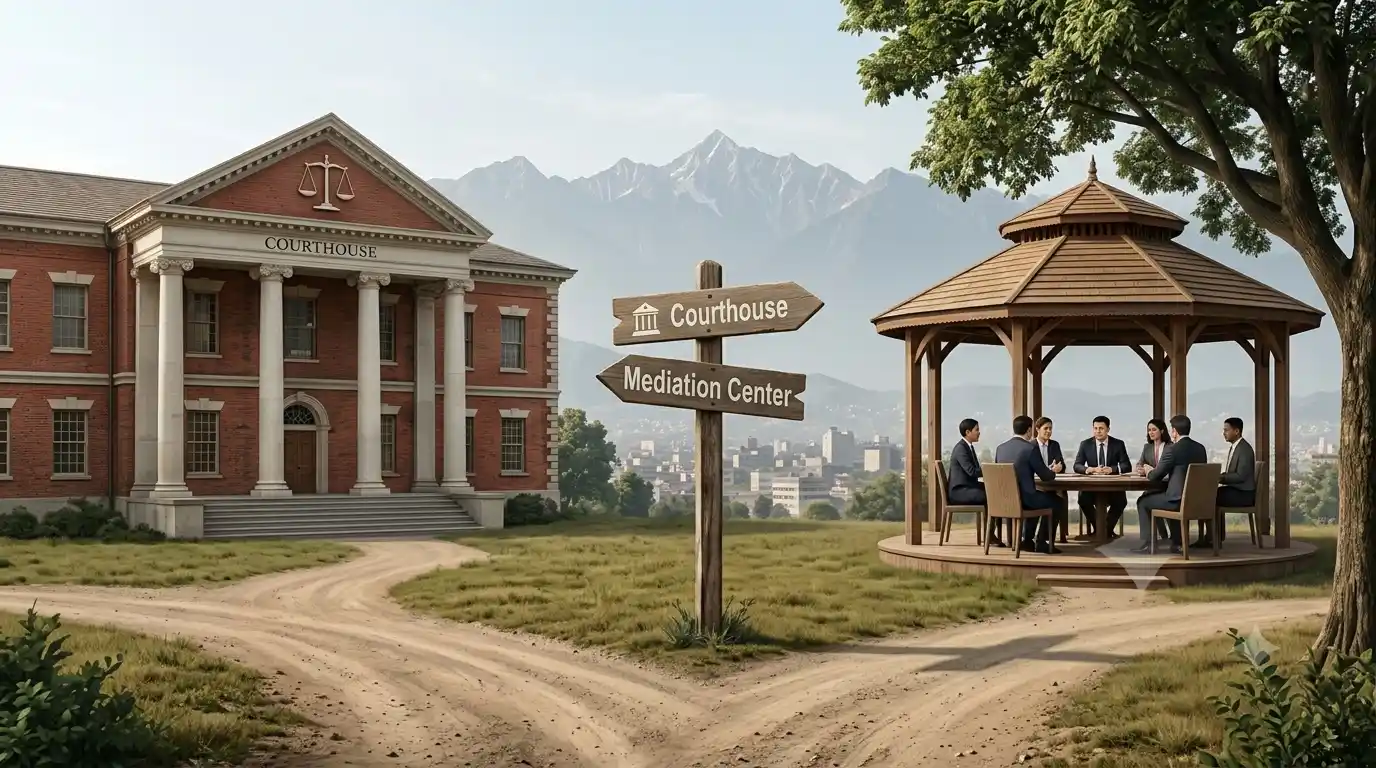
An arbitration clause that works must state the seat, the rules that apply, the number of arbitrators and how they are appointed, and the language of the proceedings. A clause missing these points invites a preliminary fight about the arbitration itself, which defeats the purpose of choosing it.
Escalation before arbitration. For long-term contracts, we recommend a short ladder: written notice, then a meeting between senior representatives within a fixed number of days, then mediation, then arbitration. Many disputes settle at the second step, at a fraction of the cost.
Limitation. A claim for breach of contract is subject to a limitation period under the Civil Code, generally running from the date of breach. We check this at the start of every dispute file because a claim filed late can be defeated regardless of how strong the merits are.
Enforcement challenges. Court timelines can stretch, which is why a well-drafted arbitration clause is often the more practical route. A court can only enforce what it can understand, so vague scope and vague price remain the most common causes of a weak case. Proving loss and locating the assets of the losing party are far easier when the contract itself requires proper records, security, or a bank guarantee.
Challenges in Enforcement of Commercial Contracts
Even a well-drafted contract can run into obstacles once a dispute actually reaches enforcement. These are the recurring challenges we see in Nepal:
- Procedural delays: Court proceedings in Nepal can stretch on for years due to case backlogs and procedural formalities. This makes arbitration, when properly drafted, a far more practical route for commercial disputes.
- Ambiguous contract language: A court or tribunal can only enforce what it can clearly understand, so vague scope, pricing, or obligations weaken a case from the start. Precise drafting at signing prevents this problem long before it becomes a litigation issue.
- Absence of a dispute resolution clause: Without a clear mechanism specifying arbitration or court jurisdiction, parties waste time and money simply arguing over where and how the dispute should be resolved. This delay often outlasts the actual merits of the underlying claim.
Our Commercial Contract Services
We provide comprehensive legal support across all stages of commercial contracting, from drafting and negotiation to enforcement and dispute resolution. Our contract law and corporate advisory team has handled these matters directly across every contract category below.
1. Contract Drafting
We draft clear, enforceable, and commercially sound contracts tailored to specific business needs. Each drafted contract is prepared with careful legal analysis to identify potential risks, protect client interests, and ensure compliance with Nepali law.
2. Contracts we draft include:
- Share purchase and shareholder agreements
- Joint venture agreements
- Loan and financing agreements
- Private and commercial lease agreements
- Equipment and asset purchase agreements
- Aircraft purchase and leasing contracts
- Intellectual property, franchising, and licensing agreements
- Software licensing and IT service agreements
3. Handling and Enforcement of Commercial Contracts
We assist clients in managing and enforcing commercial contracts throughout their lifecycle. Our services include:
- Advising on rights and obligations under existing contracts
- Handling partnership, alliance, and shareholder arrangements
- Addressing breaches and advising on legal remedies
- Supporting enforcement through negotiation, arbitration, or litigation
4. Negotiation of Contractual Terms
Negotiating favorable yet balanced contractual terms is crucial for long-term commercial success. We represent clients in contract negotiations to:
- Protect business interests
- Allocate risks appropriately
- Secure commercially advantageous terms
- Prevent future disputes
5. Contract Review and Amendment
We conduct detailed reviews of existing commercial contracts to identify:
- Legal ambiguities
- Unenforceable or risky clauses
- Compliance issues
- Gaps in dispute resolution mechanisms
Where required, we assist in amending contracts with mutual consent to ensure legal clarity and enforceability.
Why is Legal Support Essential for Commercial Contracts?
- Legally enforceable agreements
- Reduced business risk
- Strong negotiation outcomes
- Effective dispute management
- Long-term commercial stability
Commercial contracts are essential instruments for business operations in Nepal. Governed by the National Civil Code, 2074, they require careful drafting, negotiation, and enforcement to ensure legal certainty and commercial protection. With proper legal guidance, businesses can minimize disputes, safeguard investments, and build sustainable commercial relationships.
How to Work With Us?
Send us the document or a short summary of the deal. A draft contract, a term sheet, or even a note on what you have agreed is enough to start. We give you a free initial consultation covering the main legal risks, then deliver a marked-up draft with comments explained in plain language. We can sit in on the negotiation or work behind you while you lead it, confirm authority, stamp and register at execution, and track renewal dates afterwards so nothing is missed.
Book your free consultation with Top Legal Advisers.
Frequently Asked Questions
1. What is a commercial contract?
A commercial contract is a legally binding agreement made for a business purpose, covering the sale of goods, supply of services, partnerships, investment, leasing, construction, and licensing.
2. Which law governs commercial contracts in Nepal?
The National Civil Code, 2074, which replaced the Contract Act, 2056. Sector-specific laws also apply depending on the deal, including the Companies Act, 2063, the Foreign Investment and Technology Transfer Act, 2075, the Labour Act, 2074, the Public Procurement Act, 2063, and the Arbitration Act, 2055.
3. Is there a Contract Act, 2074, in Nepal?
No. Contract law now sits inside the National Civil Code, 2074, which repealed the Contract Act, 2056.
4. Is there a fixed commercial contract format in Nepal?
No format is prescribed by law. What matters is clarity, completeness, and correct execution.
5. What is a commercial land contract?
An agreement to buy, sell, lease, or develop land or premises for business use. Ownership transfers only on registration at the Land Revenue Office, so a signed agreement alone does not pass title.
6. Can a foreign company buy commercial land in Nepal?
Restrictions apply to land ownership by foreign nationals and entities. In practice, land is held by the Nepal-registered company, and acquisition for an approved investment project runs through the applicable approval framework.
7. How do you bid on a commercial cleaning contract in Nepal?
For a government or public sector client, you bid through public procurement under the Public Procurement Act, 2063, usually via the e-GP system. You need a registered and renewed company, tax clearance, labour and Social Security Fund compliance, bid security, and full compliance with the technical conditions. For a private client, you submit a commercial proposal and negotiate directly.
8. Is there an international commercial contract act in Nepal?
No. Cross-border contracts are governed by the law chosen by the parties, the National Civil Code, 2074, where Nepali law applies, the Arbitration Act, 2055, and the New York Convention, to which Nepal acceded in 1998. Nepal is not a party to the CISG.
9. What is commercial contract management?
Controlling a contract across its full life: due diligence, drafting, negotiation, execution, performance monitoring, renewal and variation, and closure or dispute.